
The family is the unit of growth and of health and illness; it is the seat of primary and secondary identifications; it is a structure that ensures not only the biological reproduction of the individual, but also the reproduction of the social and psychological system of the family.
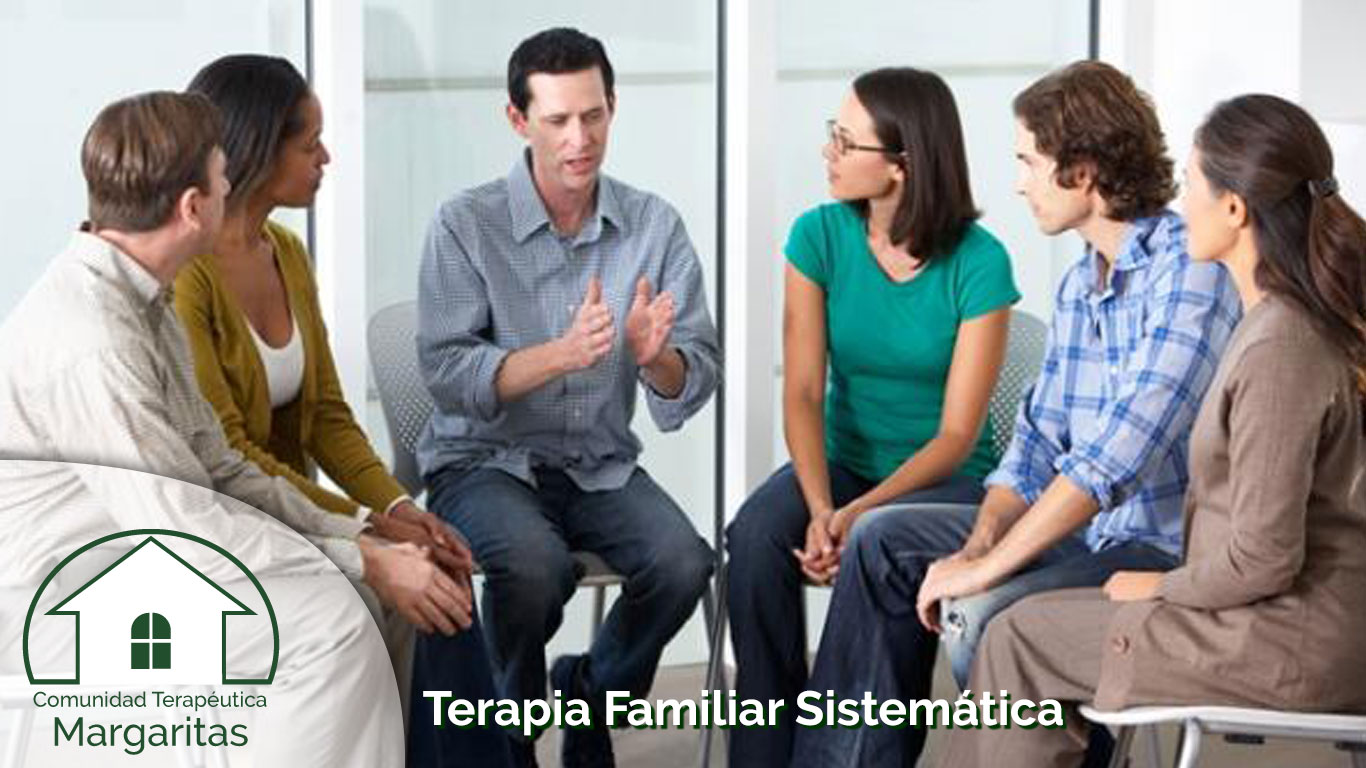
Our objective is to present a family-centered approach used at the Margaritas Therapeutic Community, an institution dedicated to the care, prevention, and rehabilitation of psychiatric patients.
The family is the social foundation for interaction between children, parents, and the extended family. Ackerman defines it as a basic social structure, configured by the interplay of differentiated roles (father, mother, and children). The patient, by fulfilling a role within the family (the repository of the family's mental illness), makes the family, not the individual, the unit of the illness.
Its primary function is the socialization of its members, which is achieved through relationships of aggression and submission to different types of family authority. This involves both a system of beliefs and attitudes resulting from upbringing and the way in which the individual integrates into the socioeconomic system.
Working with the family group (ideally with the entire family, but often with the available members) is the basis for the selected patient's recovery and fundamental for the initial diagnosis and treatment. It is far more therapeutic than focusing the problem solely on the patient rather than the family. This approach stems from our experience at the Mendao Institute, where we did not admit any patient for inpatient care unless their family also participated in family therapy (since if the family does not acknowledge their role in the patient's pathology, this can be a contributing factor to future relapses).
The first phase of family therapy begins when the family visits the Margaritas Therapeutic Community or consults with the treating physician. During this phase, we explore not only the patient's current condition but also the family dynamics, both conscious and unconscious, which often determine the patient's symptoms.
In many cases, this approach clarifies the reasons for hospitalization and raises awareness within the entire family group about the nature of the pathology, not only in the patient but also within the family itself. This initial phase consists of three to six interviews. The second stage will last while the patient is hospitalized, with the goal of understanding the reason for hospitalization (first admission - relapse), as well as conscious and unconscious family dynamics that determine the pathology.
Diagnostic studies will support the diagnosis, as well as laboratory tests that will provide a more comprehensive diagnosis, including physical aspects. Various therapeutic elements will be used, such as individual therapy an average of three times a week, group therapy twice a week for an hour and a half each session, and family therapy once a week.
Reduced symptoms do not mean the patient is cured, but rather that they will have a way to live more functionally in society and with their family, resume their studies, find work, or seek opportunities for resocialization (partner, friends, etc).
The third stage is discharge from the hospital and continuation of treatment as an outpatient. With reduced symptoms, this is the most vulnerable stage. A decision will need to be made regarding whether the family can administer the medication to the patient or if they can do so themselves. How will they get to the doctor's office? Once the family support group has been established, what will the family's support be, or will a caregiver or therapeutic companion be needed?
The duration of this stage will depend on each patient and the type of illness, as well as the family's progress in understanding the illness and its underlying unconscious factors.
Theoretical Framework:
By focusing on the study of the subject, Freud formulated the determining importance of the family for the constitution of the individual and their unconscious. His discovery of the Oedipus complex through his self-analysis allowed him to recognize the important role of parents and siblings in the course of a child's development. In "The Sexual Instruction of Children" and "The Analysis of a Phobia in a Five-Year-Old Boy" (Little Hans), he again refers to the relationships between parents and children and points out that "the child's upbringing can exert a powerful influence for or against the predisposition to neurosis."
In the novel "A Relative of the Neurotic," he studies neurotic fantasies, but highlights the roles that family members play in enabling the construction of these fantasies. He makes observations about the family in his works "The Sexual Instruction of Children," "Two Lies Children Tell," "A Child Is Being Beaten," and "Group Psychology and the Analysis of the Ego."
It emphasizes the importance of the other in the individual's emotional life. Whether as a model, object, helper, or adversary, the child exhibits two psychologically distinct types of attachment. One is frankly sexual, to the mother, or vice versa in the case of the woman, to the father. Identification, as a defense mechanism, plays a very important role in the bonding processes with the parents. It defines it as the earliest manifestation of an affective bond to another person and plays a significant role in the prehistory of the Oedipus complex. The child shows two psychologically distinct types of attachment: one frankly sexual, to the mother, and identification with the father, whom they consider a figure to imitate. The problem is that, as in most of our homes, the man is absent because he has left, has another family, or is a dysfunctional father. It is in therapeutic processes that this is addressed, and the processes of identification are carried out with the therapists.
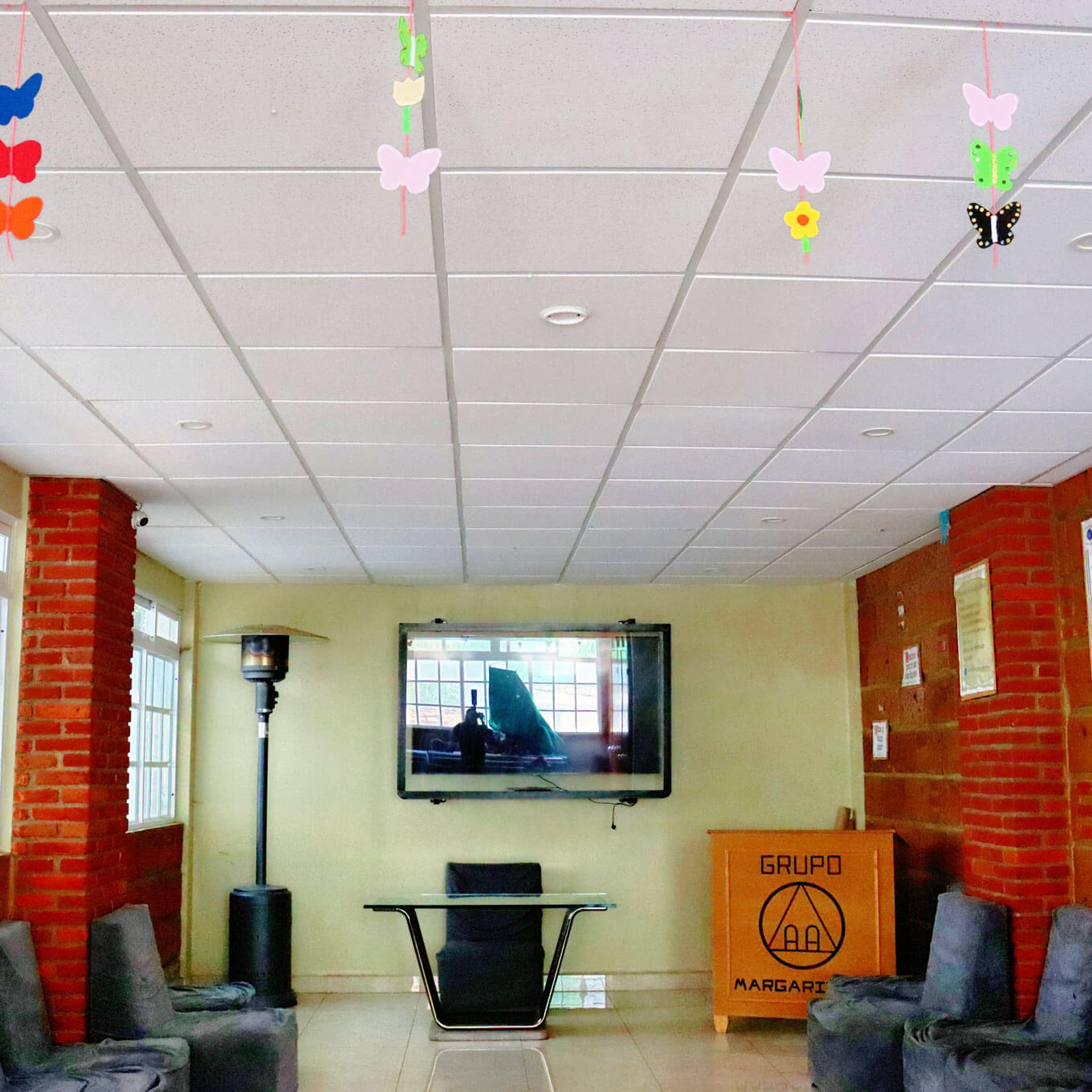

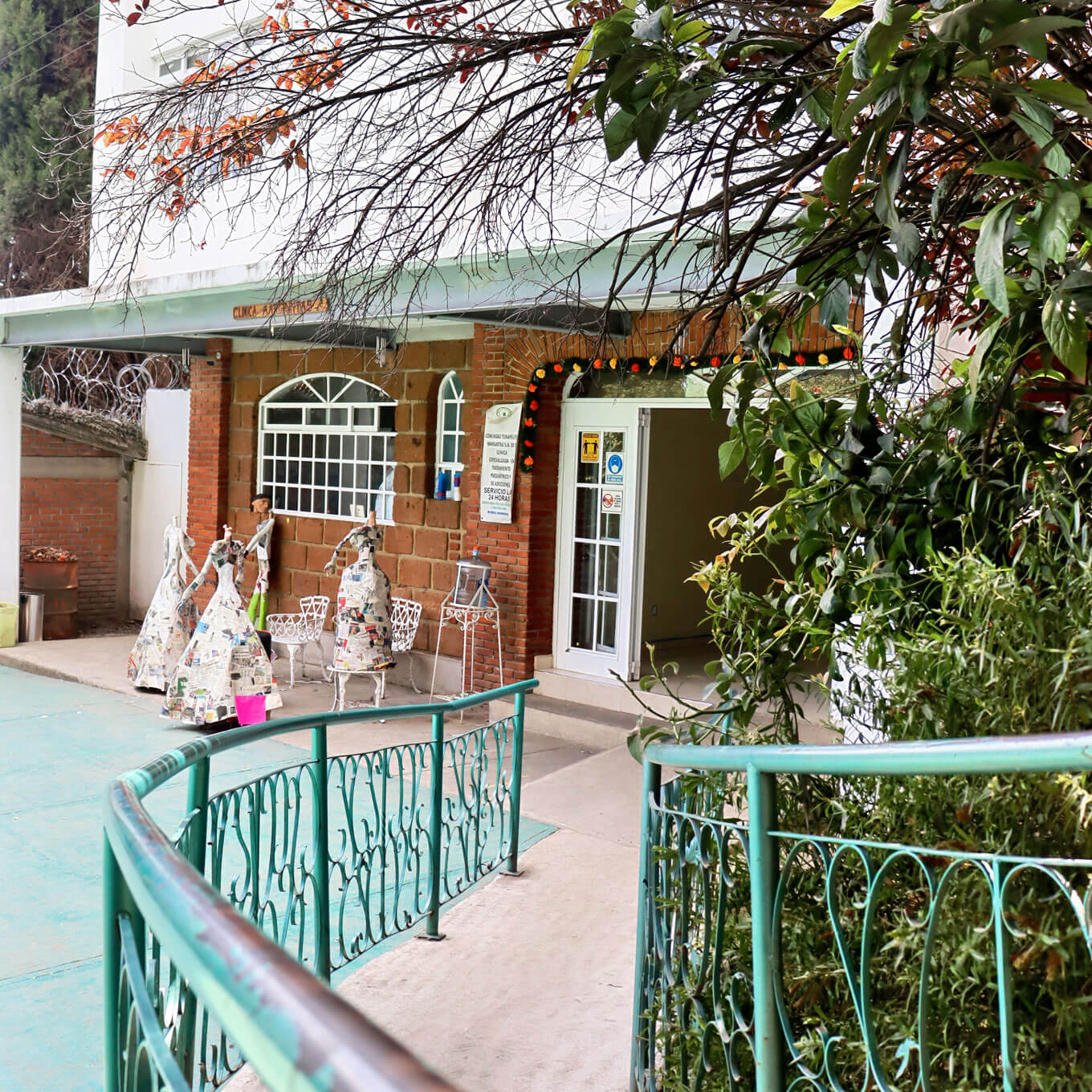
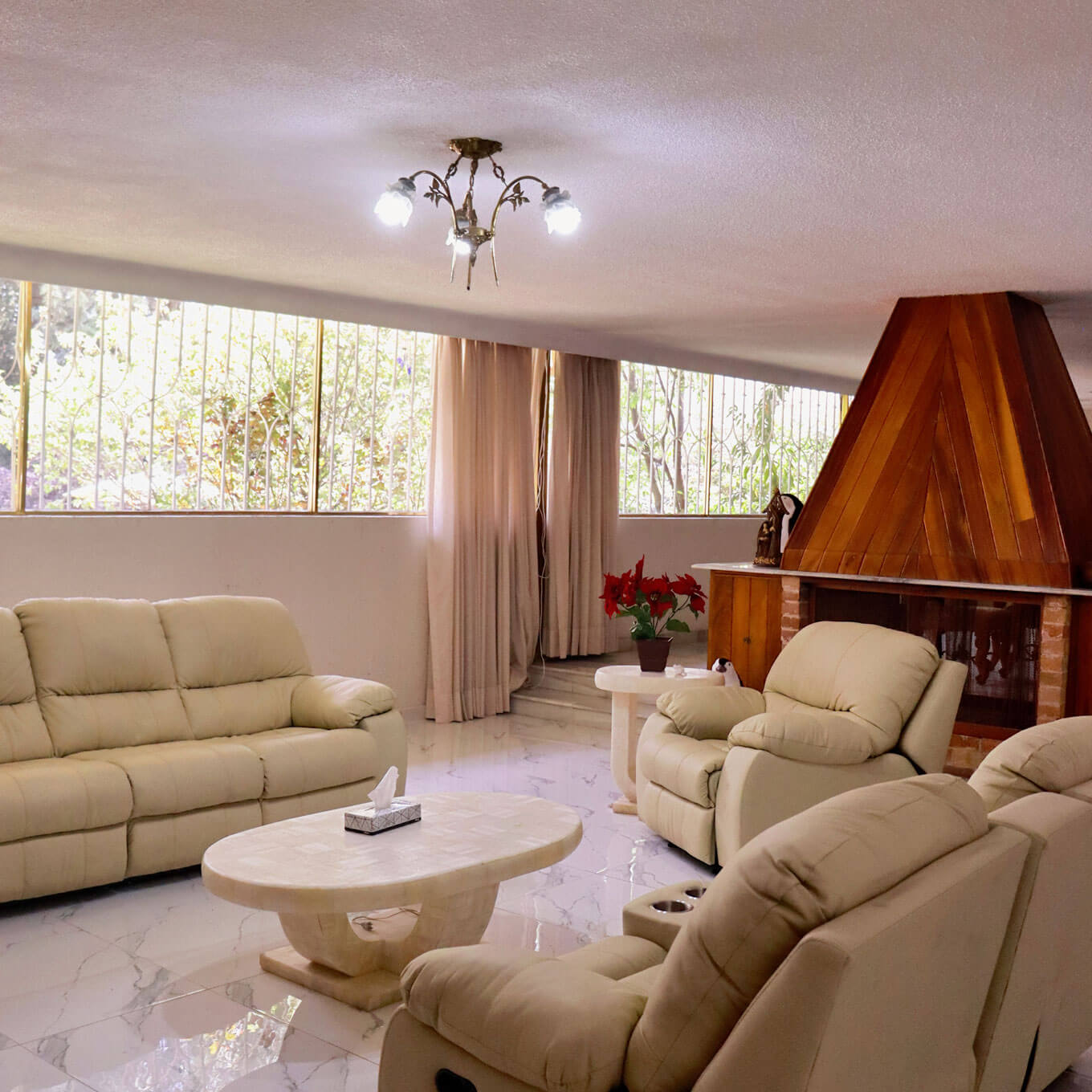

Our unique model allows patients to be in an inclusive environment, interact with society, and thrive within it. Over time, we have seen excellent results with the types of therapies and workshops we offer, which set us apart from institutions, psychiatric clinics, and other halfway houses in Mexico.

MEET OUR TEAM
Fully committed
to your mental health
Meet Margaritas Therapeutic Community
Medical Staff


Facilities
We have the best facilities in an area away from the city for the peace of mind of our patients.
- Pavilion 1
- Pavilion 2
- Sports court
- Green areas

Activities
Our therapies include a variety of activities both within and outside the community.
- Crafts and Arts Activities
- Workshops:
- Reading Workshop
- Film Discussion Workshop
- Bookbinding Workshop
-
Physical Activities:
- Movement Therapy
- Yoga
- Tai Chi
- Pilates
Treatments and Therapies
at Margaritas Therapeutic Community
Multidisciplinary Approach

Psychological Care
It focuses on guiding the patient through a health professional (psychologist).

Medical Treatment
Interconsultations with internal medicine, dentistry, neurology, gynecology etc, plus laboratory and imaging tests according to the patient's needs.

Psychological Care
It focuses on guiding the patient through a health professional (psychologist).
Medical Treatment
Interconsultations with internal medicine, dentistry, neurology, gynecology etc, plus laboratory and imaging tests according to the patient's needs.