In Individual Therapy, a Psychologist or Psychiatrist will be responsible for understanding your personal situation and the disorder you are experiencing, with the aim of establishing a communicative and trusting relationship in which feelings, thoughts, experiences, etc. are expressed.

The goal of therapy is to focus all of the patient's ideas on how to cope with all kinds of situations in daily life, help them face problems, and above all, improve their mental health. It gives the patient the necessary tools to learn to deal with conflict on their own.
It is used to treat various problems such as anxiety, addictions, depression, and mental disorders. Sometimes it only requires a conversation between the patient and the specialist; however, it can also incorporate other techniques such as drawing or writing.
The specialist will conduct an evaluation to understand the problem, identify its causes and consequences, and find the best solution. They will also monitor the progress made throughout the therapy sessions, always in a neutral, objective, honest, direct, and impartial manner.
It is common for people to resist facing their problems with the help of therapy, but it is important to understand that it is often necessary to improve quality of life.
What are the types of therapy?
There are different types of psychotherapy, but the type of treatment each patient receives is different, depending on the severity of their problems, needs, the psychologist's theoretical approach, etc. Therefore, the best option will be chosen for each case. In some cases, different elements of each type of therapy can be combined.
The main types are:
Cognitive-Behavioral Therapy (CBT)
This is a combination of Cognitive and Behavioral Therapy. It is based on the premise that dysfunctional thoughts, beliefs, behaviors, and feelings affect emotions and how we cope with problems, allowing for positive modification. It is not the situation itself that generates the response or distress, but rather the belief or thought we hold about the situation.
Dysfunctional thoughts can contribute to the problems that overwhelm the patient, so it is necessary to pay attention to them. In therapy, the patient will be asked to perform specific tasks or activities tailored to each individual case, with the aim of providing them with tools to cope with daily life challenges and improve their behavior.
Psychoanalytic Therapy
Based on the studies of Sigmund Freud, its main objective is to identify unconscious or repressed thoughts, emotions, and behaviors, mostly stemming from childhood. It is essential that the patient express these openly so that the therapist can analyze them and determine which are dysfunctional thoughts and unconscious conflicts.
Humanistic
Based on the work of Abraham Maslow and Carl Rogers, it is heavily influenced by phenomenology and existentialism. It starts from the idea that each individual is conscious, intentional, and constantly developing; their mental representations are a form of self-knowledge. A person cannot experience reality directly.
The patient is seen as someone on an existential quest, questioning the reasons behind the events that happen to them and their meaning. Its goal is to empower the patient to make more confidence in their decisions and provide them with tools to cope with any problems that may arise.
Gestalt
Developed by Fritz Perls, Laura Perls, and Paul Goodman, it is based on the idea that the whole is the sum of its parts. It focuses heavily on the present moment and the patient's bodily and emotional self-awareness. It views the human being as an integrated whole comprised of needs, sensations, emotions, experiences, and so on.
Its goal is for the patient to understand their problems holistically, develop their potential, learn from their experiences, and restructure their thinking to gain perspectives that are more useful for decision-making.
Systemic Therapy
This therapy also takes an integrative approach and emphasizes the patient's relationships. Its principle is that everything we are and do stems from the stimuli we receive from the external world, such as our relationships with others, our communication with them, the activities we undertake, and the resulting outcomes, because this is viewed as a system.
It seeks out dysfunctional patterns in the behavior of a group of people, not to analyze them, but to redirect them, making changes in the dynamics of relationships, with the aim of achieving balance.
There are other types of individual therapies, each functioning according to different perspectives. All are focused on improving the patient's mental health; however, individual therapy requires the patient to be completely honest in each session.
Mental health is a fundamental part of being human, so emphasis should be placed on this aspect to be able to perform activities optimally when a disorder or difficulty arises. Often, people believe that therapy is unnecessary, which is completely false, as it requires attention just like any other medical discipline.
If you require more information, we invite you to fill out the Contact form to learn about the working methods of the Margaritas Therapeutic Community.
Its main function is the socialization of its members, which is achieved through relationships of aggression and submission to different types of family authority. This involves both a system of beliefs and attitudes resulting from upbringing, as well as the way in which the individual integrates into the socioeconomic system.
Working with the family group (ideally with the entire family, but often with the available members) is the foundation of the selected patient's recovery and fundamental for the initial diagnosis and treatment. It is far more therapeutic than focusing the problem solely on the patient rather than the family. This approach stems from our experience at the Mendao Institute, where we did not admit any patient for inpatient care unless the family also participated in family therapy (since if the family does not acknowledge its role in the selected patient's pathology, this can be a contributing factor to future relapses).
The first phase of family therapy begins when the family comes to the Margaritas Therapeutic Community or consults with the treating physician. During this phase, we explore not only the selected patient's current condition but also the family dynamics, both conscious and unconscious, which often determine the patient's symptoms.
In many cases, this process clarifies the reasons for hospitalization and raises awareness within the entire family group about the type of pathology, not only in the patient but also within the family itself. This first phase will consist of 3 to 6 initial interviews. The second stage will last while the patient is hospitalized, with the goal of understanding the reason for hospitalization (first admission - relapse) and the conscious and unconscious family dynamics that determine the pathology.
Office studies will support the diagnosis, as well as laboratory tests that will provide a more comprehensive diagnosis, including physical aspects. Various therapeutic elements will be used, such as individual therapy an average of 3 times a week, group therapy twice a week for an hour and a half each session, and family therapy once a week.
A reduction in symptoms does not mean the patient is cured, but rather that they will have a way to live more functionally in society and with their family, resume their studies, find work, or seek opportunities for resocialization (partner, friends, etc).
The third stage is discharge from the hospital and continuation of treatment as an outpatient. Once symptoms have subsided, this is the most vulnerable stage. A decision must be made regarding whether the family can administer medication to the patient or if the patient can do so independently. How will they get to the doctor's office? And once the family support group has been established, what kind of support will the family provide, or will a caregiver or therapeutic companion be needed?
The duration of this stage will depend on each patient and the type of illness, as well as the family's progress in understanding the illness and its underlying unconscious factors.

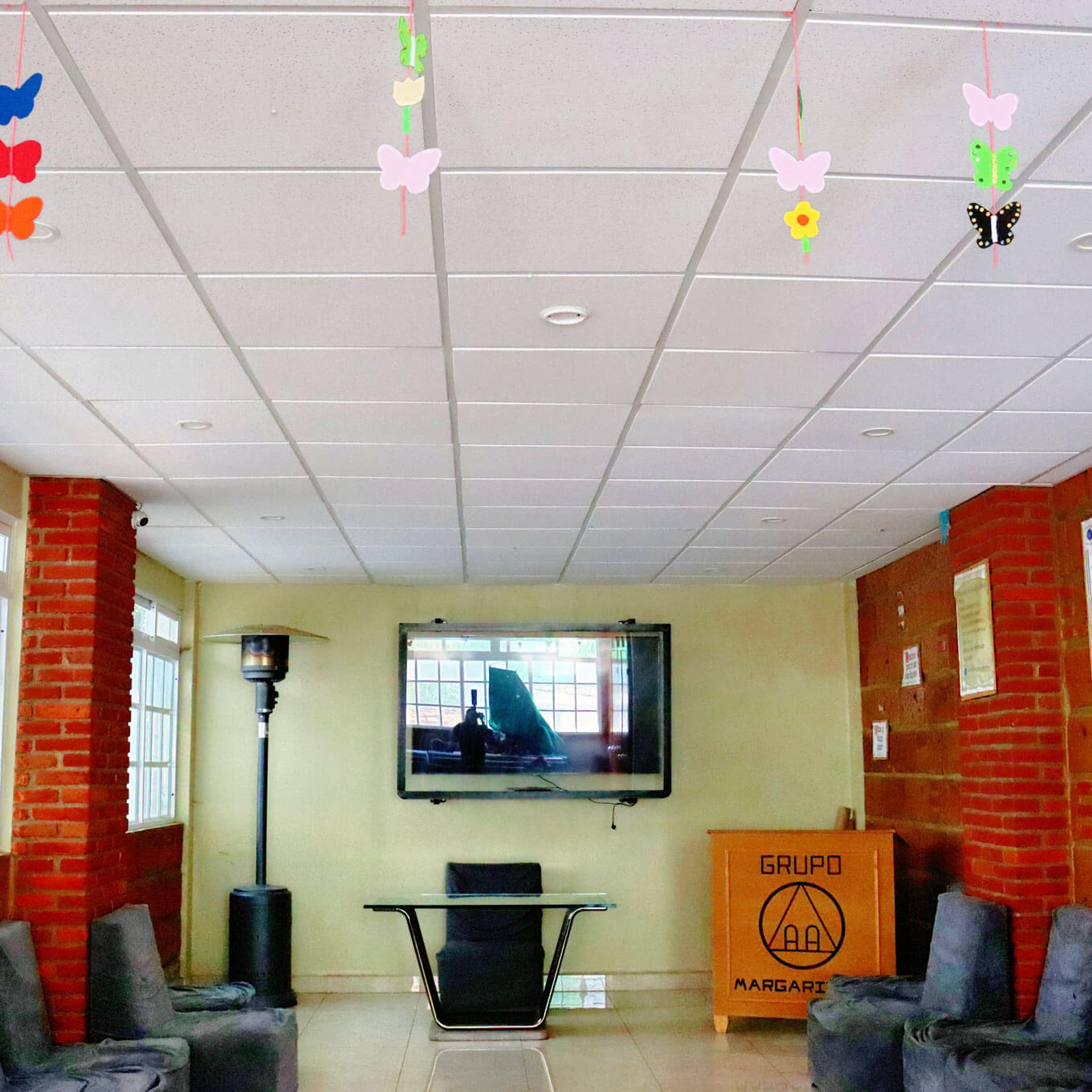



Our unique model allows patients to be in an inclusive environment, interact with society, and thrive within it. Over time, we have seen excellent results with the types of therapies and workshops we offer, which set us apart from institutions, psychiatric clinics, and other halfway houses in Mexico.

MEET OUR TEAM
Fully committed
to your mental health
Meet Margaritas Therapeutic Community
Medical Staff


Facilities
We have the best facilities in an area away from the city for the peace of mind of our patients.
- Pavilion 1
- Pavilion 2
- Sports court
- Green areas

Activities
Our therapies include a variety of activities both within and outside the community.
- Crafts and Arts Activities
- Workshops:
- Reading Workshop
- Film Discussion Workshop
- Bookbinding Workshop
-
Physical Activities:
- Movement Therapy
- Yoga
- Tai Chi
- Pilates
Treatments and Therapies
at Margaritas Therapeutic Community
Multidisciplinary Approach

Psychological Care
It focuses on guiding the patient through a health professional (psychologist).

Medical Treatment
Interconsultations with internal medicine, dentistry, neurology, gynecology etc, plus laboratory and imaging tests according to the patient's needs.

Psychological Care
It focuses on guiding the patient through a health professional (psychologist).
Medical Treatment
Interconsultations with internal medicine, dentistry, neurology, gynecology etc, plus laboratory and imaging tests according to the patient's needs.